

If you're paid on a biweekly schedule, you might be wondering: how many biweekly pay periods in 2026? The answer might surprise you.
Every few years, the calendar creates an unusual payroll situation: a biweekly pay schedule that results in 27 paychecks in a single year instead of the usual 26. This happens roughly every 11–12 years, depending on your company's specific payroll start date.
Whether your company experiences this depends entirely on when your pay cycle begins. Some years, the math simply doesn't produce a 27th period at all — and 2026 is one of those standard years for most employers, who will see the usual 26 paychecks.
But when a 27th period does occur, it raises real planning questions for both workers and employers.
Can 2026 have 27 biweekly pay periods?
Usually, in most years, biweekly pay schedules result in exactly 26 pay periods.
The math is simple: there are 52 weeks in a year, and if you're paid every two weeks, that's 52 ÷ 2 = 26 paychecks. This is what most people receive when they are paid in a biweekly cycle.
But here's where it gets interesting. A regular year has 52 weeks plus 1 extra day (or 2 extra days in a leap year). Over time, those extra days add up — and eventually cause a year to have a third pay period.
What is a leap year? A leap year is when we add an extra day to February (making it 29 days instead of 28) every 4 years, to keep our calendar in sync with how long it actually takes Earth to orbit the sun.
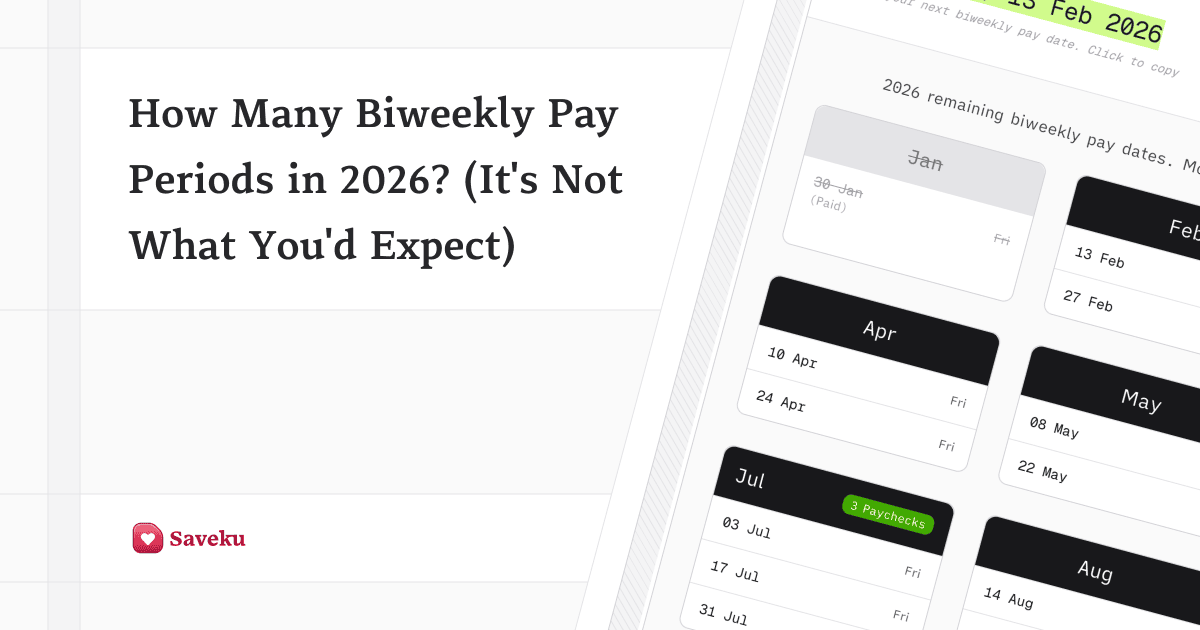
The easiest way to know for sure? Use a Biweekly Pay Date Calculator and input your company's pay period start date. You'll see exactly how many pay periods fall within 2026 and when each paycheck will arrive, instantly.
How the biweekly payroll 2026 can affect employees
If you're getting paid biweekly, a 27-pay-period year can be both exciting and confusing.
The good news:
- You'll receive one extra paycheck during the year.
- This can be a great opportunity to boost your savings, reduce debt, or treat yourself.
- Your annual salary total amount stays the same—you're just receiving it spread across 27 checks instead of 26.
The important note:
- Each paycheck will be slightly smaller if your annual salary is divided by 27 instead of 26.
- If you budget based on "two paychecks per month", there will be three months in 2026 where you receive three paychecks.
- Benefits like health insurance and retirement may be split across more paychecks, so each paycheck takes out a smaller amount.
Many people treat the extra paycheck as bonus money for financial goals. Just remember to adjust your budget if your bills are based on a 26-paycheck year.
How the biweekly pay period count 2026 affects employers
For employers and payroll managers, a 27-pay-period year requires some planning.
Budget considerations:
- Annual payroll costs remain the same, but they're distributed across 27 periods instead of 26.
- If you budget monthly, some months will have three payroll runs instead of two.
- Some benefits your company adds per paycheck, like matching your 401k retirement savings, will happen one extra time that year.
Payroll processing:
- You'll need to process one additional payroll during the year.
- Payroll software and services should handle this automatically, but it's worth confirming.
- Year-end tax documents (W-2s) will reflect all 27 pay periods.
Communication:
- Employees may have questions when they notice smaller individual paychecks or see three pay periods in a month.
- Proactive communication about the 27-pay-period year can prevent confusion.
Using a biweekly payroll calendar for 2026 helps you visualize exactly when those pay periods fall and plan accordingly. The Biweekly Pay Date Calculator can generate a full year's schedule based on your start date.
When will the "extra" paycheck happen?
The extra 27th paycheck usually falls around July to December, often in late December, depending on your company's pay schedule.
This is because biweekly pay cycles that create a 27-period year typically start early in January, meaning the 27th period lands near the end of December.
Again, the best way to see your exact schedule is to use the Biweekly Pay Date Calculator with your company's actual pay period start date.
Quick summary of biweekly pay periods 2026
- How many biweekly pay periods in 2026? Most companies will have 27, though some may have 26, depending on their pay schedule start date.
- Why 27 periods? The calendar year has slightly more than 52 weeks, and those extra days occasionally create an additional pay period.
- Does everyone get 27? No, it depends on when your company's pay periods start.
- Is this common? This happens roughly every 11 years for any given pay schedule.
- What should I do? Use a pay period calculator to see your exact 2026 schedule and plan your budget accordingly.
Frequently Asked Questions
Does the 27th pay period mean I get a bonus?
No, a 27-pay-period year doesn't mean extra money—your annual salary amount stays the same. You're simply receiving your regular salary divided into 27 paychecks instead of 26, which means each check will be slightly smaller.
How often does a 27-biweekly-pay-period year happen?
For any given pay schedule, a 27-pay-period year typically occurs every 11 years. The exact frequency depends on your pay period start date and how it aligns with the calendar.
Will my taxes be different with 27 pay periods?
Your total annual income and tax liability remain the same. However, because each paycheck is slightly smaller, the amount of tax withheld per check may be slightly lower. Your total withholding for the year should balance out.
Do all companies with biweekly pay have 27 periods in 2026?
Not necessarily. Whether your company has 26 or 27 biweekly pay periods in 2026 depends on when your pay period cycle starts. Use a biweekly pay period calendar 2026 calculator to check your specific schedule.
How can I calculate my exact 2026 biweekly pay schedule?
The easiest way is to use the Biweekly Pay Date Calculator. Enter your pay period start date, and it will show you exactly how many pay periods fall in 2026 and the dates of each paycheck.
Will my health insurance or other benefit deductions change?
If your benefits are deducted from each paycheck, the per-check deduction amount may be slightly lower since it's spread across 27 paychecks instead of 26. Your total annual benefit cost remains the same.
What if I'm paid biweekly but also receive overtime?
The number of pay periods doesn't change how overtime is calculated—you'll still receive overtime pay based on hours worked. You'll just receive your regular wages and any overtime across 27 paychecks instead of 26.
Plan ahead for your 2026 biweekly payroll
Now that you know 2026 may have an extra paycheck, you can plan ahead — whether you are saving money or managing your company's payroll.
Use the Biweekly Pay Date Calculator to:
- See exactly how many pay periods you'll have in 2026.
- View all your paycheck dates for the entire year.
- Plan your budget with confidence.
Whether it's 26 or 27 pay periods, knowing your schedule in advance helps you make smarter financial decisions all year long.