

The article mainly tells the good practice of self-management in remote work. One of them is burnout prevention strategies for the remote worker.
How to manage your energy, your money, and your knowledge to keep you sharp and relevant without sacrificing your work-life balance as a remote worker.
So, let's begin the digital detox tips for your remote work life.
1. Manage your energy, take a break
Putting this as the first point because taking a break is really important for your remote work lifecycle. Taking a break is not just resting or getting a good sleep schedule. It's how you maintain your pace so you won't sprint all the time.
Maintaining healthy habits as a remote worker
I know it's hard for most people, including me. You might want to start your new healthy habit as your new resolution in this new year.
You can start as simply as having more sleep hours, which is actually quite hard if you work remotely with several clients and multiple time zones. But, worth trying to do it.
You can also start by doing simple workouts. Like doing more walk on your daily activity, simple stretching every 15 minutes while sitting in your chair, and so on.
Taking a break isn't laziness
It's a recharging activity after what you've been through.
Remember to treat your remote work as a marathon, not a sprint. Maintain a sustainable pace so you can reach the finish line without collapsing or burning out.
Taking a break shouldn't be considered procrastination. It should be treated as a daily necessity to recharge your brain, body, and mood—like lunch, something you need every single day.
Procrastination is when you have a clear responsibility or task you should be doing at that moment, but you avoid it. You keep delaying it even though you know there will be negative consequences.
Do other activities
Remote workers spend most of their day in front of their devices—phones, laptops, computers, etc.—depending on their role. Because of this, we often get burned out without even realizing it.
As mentioned above, taking a break isn't limited to rest or sleep. You can engage in other activities unrelated to work.
For example, if you're a UI Designer, you could try photography, painting, or outdoor activities. It's up to you. As long as you enjoy doing it, the investment will be worth it and can boost your productivity.
Here are some activities worth trying for a remote UI Designer:
| Activity | Type | Benefits |
|---|---|---|
| Photography | Creative | Trains your eye for composition and lighting |
| Sketching/Drawing | Creative | Improves hand-eye coordination and ideation skills |
| Painting | Creative | Explores color theory in a tactile way |
| Walking/Hiking | Physical | Clears your mind and boosts creativity |
| Cooking | Creative/Physical | Engages problem-solving and sensory skills |
| Reading design books | Educational | Expands knowledge and inspires new ideas |
| Visiting museums/galleries | Cultural | Exposes you to diverse artistic perspectives |
| Playing musical instruments | Creative | Enhances pattern recognition and rhythm |
| Gardening | Physical/Mindful | Reduces stress and connects you with nature |
| Yoga/Stretching | Physical | Relieves tension from sitting and improves focus |
| Watching design documentaries | Educational | Provides inspiration and industry insights |
| Journaling | Reflective | Organizes thoughts and reflects on creative process |
| Playing video games | Recreational | Analyzes UX/UI design in interactive environments |
| Attending design meetups | Social | Networks and exchanges ideas with peers |
| Crafting (origami, pottery, etc.) | Creative/Physical | Develops spatial awareness and manual dexterity |
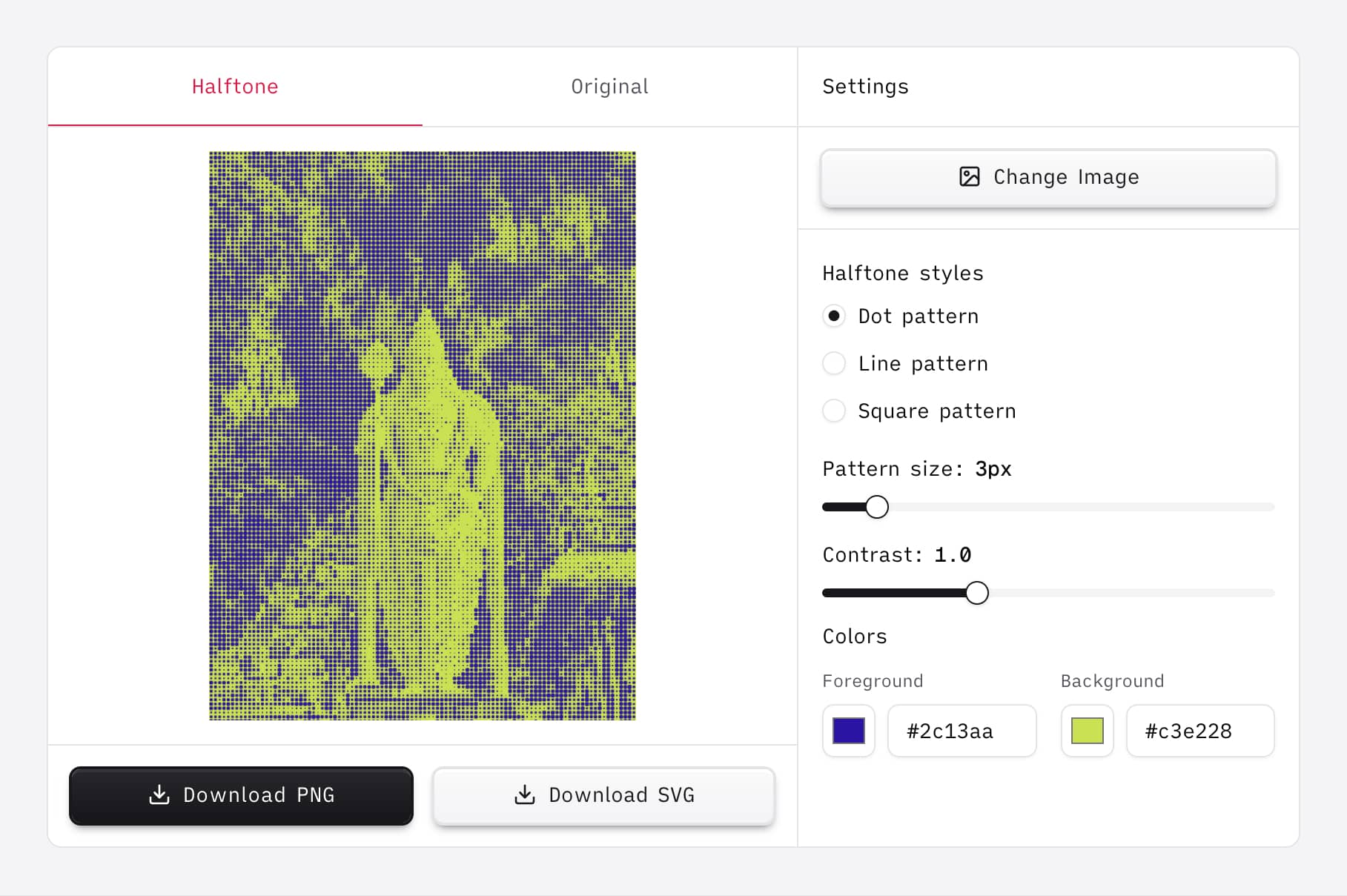
If you are into photography and want to try an aesthetic edit to your picture, try our Halftone Vector Image Generator to convert your image into a cool-looking high-contrast cartoon effect.
2. Manage your time, plan based on your activities
Time is limited. As a remote worker, you need to manage your time wisely. So, you're not doing anything unnecessary and out of scope every single time.
Create a to-do list
Always plan your day with a to-do list so you have a clear picture of what you're going to do on that day.
Having a to-do list helps you stick to your plan and avoid doing things impulsively. For example, it prevents you from taking on improvements that could take longer than your regular work hours or spending time checking things that aren't necessary.
Timezone gap (promote Timezone Converter)
Try our Timezone Converter to compare multiple time zones quickly and accurate. No login needed.
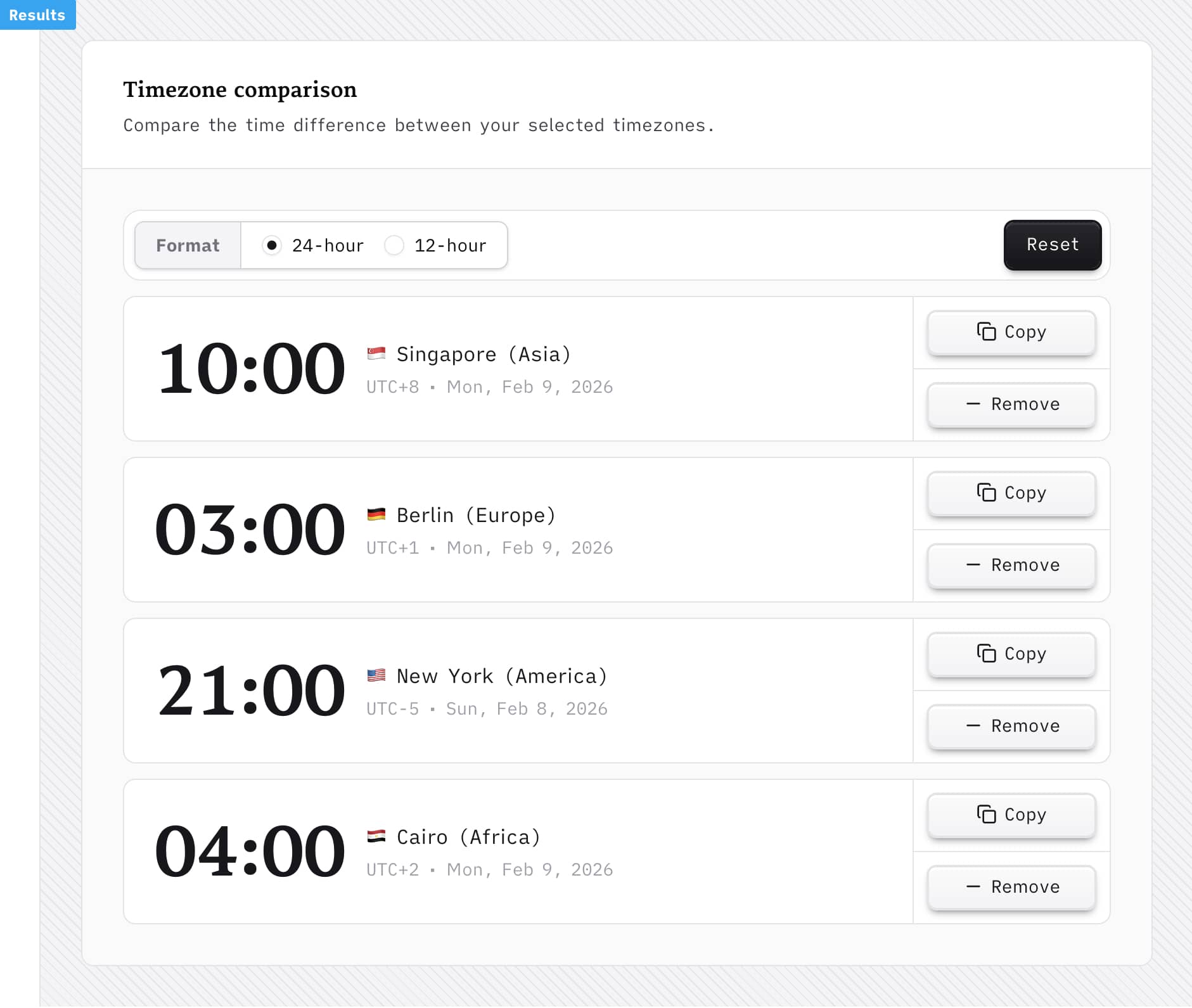
Managing workload for a remote-first company can be challenging, especially when team members come from different countries across multiple time zones.
That's why time zone management for a remote team is mandatory. You need to know who to contact in urgent situations and see who's online at any given time.
For example, people in the US time zone have a significant gap with people in the Singapore time zone. When the US team sees daylight, the Singapore team is experiencing night.
Now imagine if you don't have a system that allows them to work asynchronously. It would become a total nightmare for both teams and affect productivity.
Bonus: Compare multiple time zones from different cities:
| City | Time Zone | UTC Offset | Current Time* |
|---|---|---|---|
| Honolulu, USA | HST | UTC-10 | 3:00 AM |
| Los Angeles, USA | PST/PDT | UTC-8/-7 | 6:00 AM |
| New York, USA | EST/EDT | UTC-5/-4 | 9:00 AM |
| São Paulo, Brazil | BRT | UTC-3 | 11:00 AM |
| London, UK | GMT/BST | UTC+0/+1 | 2:00 PM |
| Paris, France | CET/CEST | UTC+1/+2 | 3:00 PM |
| Dubai, UAE | GST | UTC+4 | 6:00 PM |
| Singapore | SGT | UTC+8 | 10:00 PM |
| Tokyo, Japan | JST | UTC+9 | 11:00 PM |
| Sydney, Australia | AEDT/AEST | UTC+11/+10 | 1:00 AM (next day) |
| Auckland, New Zealand | NZDT/NZST | UTC+13/+12 | 3:00 AM (next day) |
*Example times shown when it's 9:00 AM in New York.
Note any ideas right away
Getting inspiration is equal to receiving a revelation. You need to write it down as soon as possible once you have it.
We as humans tend to forget the things we remember, even though they're important. It's because we are regular human beings. Not a robot/system/AI that is specifically to remember things.
That's why we need a tool that helps us remember it as our daily planning for our remote work activities. Any to-do list, productivity, note-taking, or task management tools for a remote team will do.
Write down what you've done as your daily log
Writing down what you've done each day not only keeps your remote work in sync and well-documented but also builds a valuable habit for your daily workflow.
This way, you'll have a detailed history of your past accomplishments.
Try our Clarity Writing Editor to help you write confidently. It supports markdown formatting, and you can import or download the results as a markdown file.
3. Manage your money, save more
This is the hardest part to manage, especially when there's nothing to manage (read: no money).
In this AI bubble era, it feels like the economy just isn't working. This isn't happening only in the digital sector but across almost all industries.
We've seen many mass layoffs recently, even from big companies like Microsoft, Google, Meta, and others. That's why seeking a remote job right now is becoming more challenging than ever.
I personally couldn't escape this wave of layoffs either.
January 2025 was one of the nightmares I never wanted to experience in real life. The company I worked for got sued, and because of that, all of us were laid off immediately.
That was one of the most painful events and memories in my life. I hope I never experience that again. Ever.
Getting paid monthly
Getting paid monthly is a regular pay cycle that most of us have experienced. Simply put, we get paid once every month on a specific date, which varies depending on company policy.
You might be wondering what the best method is to save money on a monthly basis. In my opinion, the best method is one that adapts to your needs. Every person has their own complex financial situation that's different from others.
There's nothing wrong with trying multiple savings strategies each month. By doing that, you can identify what works best, remove what's unnecessary, and create a consistent method that fits your daily routine.
Getting paid using the biweekly cycle
Getting paid as a remote worker in a biweekly cycle is different from the regular monthly salary basis. It might not be what you think if you're getting paid in a biweekly system for the first time.
It's okay to be confused about things that you don't understand. Biweekly pay is indeed somewhat confusing for a person who experiences it for the first time. Don't worry, I'll guide and explain it to you one by one.
I wrote this biweekly pay guide based on my real experience. So, I had the confusion as well and had several questions about it. Glad now I have a better understanding and can share the experience with others.
- Why am I getting paid less in my biweekly payroll? How does the biweekly payment system work?
- You are getting paid less because your biweekly salary does not come from your monthly salary value divided by two. The biweekly salary system calculation comes from the full weeks in a year divided by two.
- A year has 52 weeks in total. Because you are getting paid every two weeks, the 52 is divided by two, which gives you 26 pay periods as a result. 52/2=26. So, you will get paid 26 times in a year from your biweekly pay cycle.
- Here is an example of why you get paid less on your biweekly payroll. Let's say you are getting paid $3,000 per month. Instead of $1,500 per paycheck, you will receive
$1,384.62per paycheck.$3,000x12=$36,000, then$36,000/26=$1,384.62 - Another example, if you are getting paid $72,000 annually, you will receive
$2,769.23per biweekly paycheck.$72,000/26 = $2,769.23. -
Feel confused? You can just use our Biweekly Paycheck Calculator to calculate and see how much your biweekly payroll is received.
- When is the exact date of my biweekly payroll happening?
- It will come every two weeks since your first initial payroll.
-
You can use our Biweekly Pay Date Calculator to see when the exact date of every payroll you get is.
- Using the biweekly pay date calculator above will also give you information on when you will get three paychecks in a single month. Feels like a bonus even though in reality it's just another paycheck. This is happening because of the 26-pay-period per year calculation.
Table information for the common salary in the US using the biweekly payroll method:
| Annual Salary | Monthly Equivalent | Biweekly Paycheck | Difference from Half-Monthly |
|---|---|---|---|
| $30,000 | $2,500 | $1,153.85 | -$96.15 |
| $35,000 | $2,916.67 | $1,346.15 | -$112.18 |
| $40,000 | $3,333.33 | $1,538.46 | -$128.21 |
| $45,000 | $3,750.00 | $1,730.77 | -$144.23 |
| $50,000 | $4,166.67 | $1,923.08 | -$160.26 |
| $55,000 | $4,583.33 | $2,115.38 | -$176.28 |
| $60,000 | $5,000.00 | $2,307.69 | -$192.31 |
| $65,000 | $5,416.67 | $2,500.00 | -$208.33 |
| $70,000 | $5,833.33 | $2,692.31 | -$224.36 |
| $75,000 | $6,250.00 | $2,884.62 | -$240.38 |
| $80,000 | $6,666.67 | $3,076.92 | -$256.41 |
| $85,000 | $7,083.33 | $3,269.23 | -$272.43 |
| $90,000 | $7,500.00 | $3,461.54 | -$288.46 |
| $95,000 | $7,916.67 | $3,653.85 | -$304.49 |
| $100,000 | $8,333.33 | $3,846.15 | -$320.51 |
| $110,000 | $9,166.67 | $4,230.77 | -$352.56 |
| $120,000 | $10,000.00 | $4,615.38 | -$384.62 |
| $130,000 | $10,833.33 | $5,000.00 | -$416.67 |
| $150,000 | $12,500.00 | $5,769.23 | -$480.77 |
| $200,000 | $16,666.67 | $7,692.31 | -$641.03 |
Getting paid per project
As a remote worker who gets paid per project, saving money is more challenging than having a consistent paycheck like remote employees do.
We need to think about and manage our finances carefully since our income is based on the projects we complete.
Getting paid per project depends on many variables, which makes managing financial flow harder. For example: how long the project takes, how much it pays, how long we wait to receive payment after completion, and so on.
4. Manage your money, track your expenses
Tracking your expenses is a really good and healthy financial habit. You should consider to start doing it soon.
You can start doing it as simply as tracking the regular monthly expense. Like your internet connection fee, your entertainment subscriptions, water & electricity bills, etc.
Start listing your regular monthly expenses
You can use our Monthly Subscriptions Calculator to start tracking and see how your financial expenses are doing. Works offline, easy to use, and ready to download as PDF.
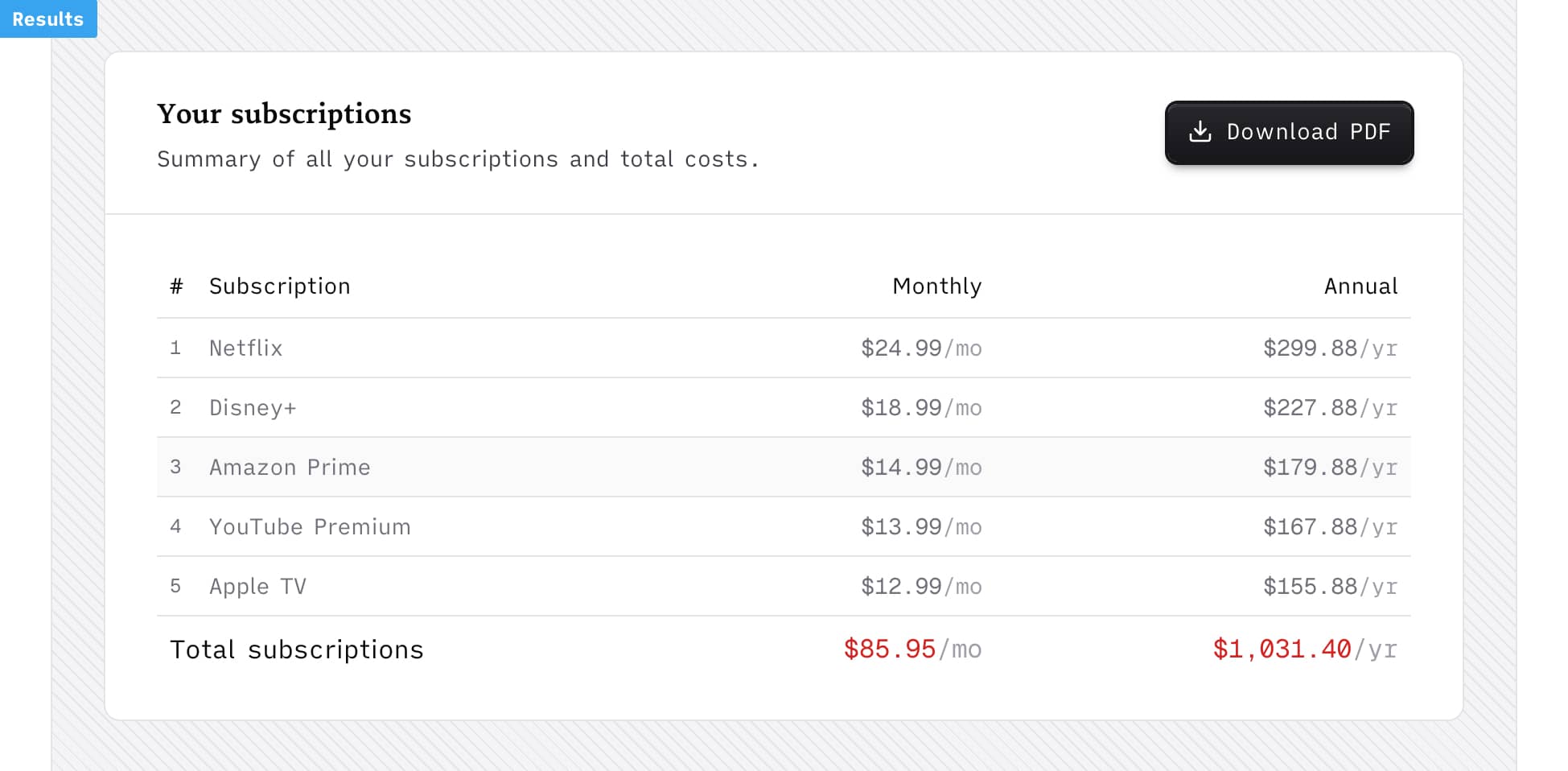
Here is a table of examples for a common monthly subscription for your inspiration to start tracking it:
| Subscription | Monthly Price | Annual Total |
|---|---|---|
| Netflix | $15.49 | $185.88 |
| Spotify or Apple Music | $10.99 | $131.88 |
| Internet service | $60.00 | $720.00 |
| Cell phone plan | $50.00 | $600.00 |
| Gym membership | $25.00 | $300.00 |
| Amazon Prime | $14.99 | $179.88 |
| Hulu | $7.99 | $95.88 |
| Car insurance | $150.00 | $1,800.00 |
| Health insurance premium | $200.00 | $2,400.00 |
| Renters or homeowners insurance | $35.00 | $420.00 |
| Disney+ | $7.99 | $95.88 |
| iCloud or Google storage | $2.99 | $35.88 |
| YouTube Premium | $13.99 | $167.88 |
| Meal kit service | $70.00 | $840.00 |
| Software subscriptions | $12.00 | $144.00 |
| TOTAL | $676.43 per month | $8,117.16 per year |
*The prices above may differ from actual service pricing. Please verify with the official sources.
See what's important and remove unnecessary expenses
After listing your monthly subscription expenses and getting clear information on where your money goes each month, your next move is to start removing the clutter.
Start identifying what's important and what's not. Remove the unnecessary expenses. By doing this, you'll save more and can put that money toward your investments.
A simple expense you might think doesn't have much value actually can affect your financial freedom in the long run. It's like a snowball compounding over time if you keep ignoring it.
5. Manage your knowledge, keep learning
As a remote worker, especially in digital fields like Software Engineering, Digital Product Design, Web Design, Illustration, Art Direction, and so on, learning and staying relevant in your expertise is mandatory.
To keep up with the latest trends that add value to your skills, you need to continuously learn and sharpen your abilities to meet industry needs.
I know this might sound tiring and not fair, but the industry is dynamic and values people who consistently show up and deliver.
How to learn anything effectively
Again, this is different for each person. We can't apply the same approach to everyone since we're all unique in our own way.
This might sound biased because it's purely from my perspective.
My effective learning journey begins with curiosity. If I don't have that in the first place, the learning process stops immediately.
Next is joy—this is crucial for learning effectively because we naturally find our easiest method to learn when we love what we're doing.
Curiosity + joy = a path to learn anything effectively. Good luck!
Join the community, learn together
Who doesn't like having friends who share the same interests, right? Learning becomes more fun when done together with a good and healthy community.
People can share their thoughts with each other, and questions that might seem impossible to solve alone can be answered by others.
Getting advice from community members who have more experience and expertise is a valuable privilege. We can avoid common pitfalls and focus on what's important to accelerate our learning process.
Conclusion
That's all five self-management tips for remote workflow that you can start applying today. Let's do a quick recap:
- Manage your energy — Take breaks seriously. It's not laziness; it's how you avoid burnout working from home and maintain a sustainable pace throughout your career.
- Manage your time — Plan your day, handle timezone gaps, and write things down. Good remote work time management strategies keep you focused and prevent unnecessary work.
- Manage your money (save more) — Understand your pay cycle, whether it's monthly, biweekly, or per project, and build a savings method that fits your situation.
- Manage your money (track expenses) — List your regular expenses, identify what's necessary, and cut the rest. Small leaks sink big ships over time.
- Manage your knowledge — Keep learning, stay curious, and join communities. The industry rewards people who consistently show up and grow.
Building healthy remote work habits doesn't happen overnight. Start with one or two tips that resonate with you, make them part of your remote worker daily routine, and build from there.
Remote work is a marathon, not a sprint. Take care of your energy, your finances, and your growth — and you'll be able to keep running without burning out.
Thank you for reading this article, hope it helps your remote work journey and gives you inspiration in this tough world. Good luck and have a nice day!